Shaw, J. (1995). Effects of fashion magazines on body dissatisfaction and eating psychopathology in adolescent and adult females. Abstract PermaLink: Fashion Magazine Article “It has been shown that fashion magazines have an age‐ and stimulus‐specific effect on the body size estimation of non‐eating‐disordered adolescent and adult females. This study examines whether photographs of thin fashion models have similar effects on female body dissatisfaction. The results indicate that adolescent girls tend to respond to fashion images by showing greater body dissatisfaction than adults, and that both groups respond more to pictures of adults than to those of adolescents. Greater adolescent dissatisfaction was related to increased age, weight and bulimic tendencies. Theoretical implications are considered.”
What is old is new again. What is different about the Internet verses magazines? For my purposes, I’ll use “analog vs. digital.” Analog was harder to come by and had to be actively sought out. If you didn’t want to see fashion magazines, you didn’t buy them or look at them in stores. Even TV was not the same experience for me - I didn’t have a TV in my room when I was growing up. Being marinated in my own upbringing, did it really matter that we ate dinner together? That I read all the time, not watched TV? That I had a radio/boombox in my room? I’m not certain how to answer those questions yet. I reflect on my childhood and my kids’ childhoods, and I know they are significantly different from me, yet it’s very difficult to quantify. This is my bias and I want to be very careful in handling it - relying on good data and good studies from decades - I need a literature review. This is what I’m trying to do here.
Overall, so much of what I casually read links back to limiting screen time and spending “quantity time” (no such thing as “quality time” because those are the let loose, stream of time that “just happens” in moments of quantity. There is an old phrase from WWII that says, “Quantity has a quality all its own.” This is true.)
However, this sentiment does not take into account the reality that the digital world IS the real world now. Our brains can be fooled so easily! Even without a ton of high tech wizardry, the online spaces provided by video games, chat rooms, comment sections, and social media are the NEW NEIGHBORHOOD for many people. There’s no age limit to this either, but of course, younger people are more likely to be in these spaces than older people, since the young are generally more familiar with the tech needed to enter these spaces. Please be careful about generalizing too much, though! That’s a quick way to get yourself in trouble!
Jantz, G. (2018). Are You Living in Continuous Partial Attention? Families.com Web Site: Are You Living in Continuous Partial Attention?
‘Going online is compelling. There is so much to see and do, so many ways to connect. Maintaining your online presence while simultaneously navigating life requires something called continuous partial attention, according to Linda Stone, a former Apple and Microsoft executive, who first coined the phrase. She defines continuous partial attention this way: “To pay continuous partial attention is to pay partial attention – continuously. It is motivated by a desire not to miss anything and to be a live node on the network – in touch and seen by others.”’
The fact that we can’t generalize also steps up the intensity for the Sandwich Generation. The fact that both older and younger people have digital neighborhoods (including friends, hangouts, and stores, just like a “real life” neighborhood”) means that the Sandwich are squeezed on multiple fronts - needing to monitor children and parents for scammers, hackers, and general predators. CYBERSPACEAND AND “BODYSPACE.” Bodyspace sounds like a strange term, but I like it a lot in describing what is “real life” for most of us - using our bodies in actual physical space. Pre-digital times, even our thought life revolved around our bodies - physically reading books - finding enough ambient light to do so; physically writing letters - different from keyboarding; even typing with typewriters was significantly different from the computer - you had to physically maintain the typewriter (keys, carriage, ribbon, paper), find ways to transport it and make sure you knew how to type (oh, the amazing and phenomenal BACKSPACE KEY!). You had to know how to spell, too.

I include the above images from the movie, “Saving Private Ryan,” because they encapsulate bodyspace – he wants to keep a diary and asks to transport the typewriter. The Corporal is inexperienced, but the Captain has lots of experience and knows the saying, “Ounces lead to pounds, and pounds lead to pain.” Hence, don’t carry a typewriter when a pencil will do just fine. But we are more than that, with a mind of our own, and that is where digital space comes in, too. Dr. Gregory Jantz used the term meatspace as opposed to cyberspace, and since it fits, I will use the modified term “bodyspace.” “Meatspace” is problematic to me because of the word “meat” which sounds like “meet.” I have met many people in cyberspace and consider them just as real as the people I see around me, so BODYSPACE makes more sense to me in general. Since cyberspace is the real world, too, “realspace” also makes no sense. The Digital Sandwich Generation is both a bodyspace sandwich and a cyberspace sandwich, each with its own rules, pitfalls, and markers for success and happiness. There are brand new pressure points for the DSG that the (Traditional Sandwich Generation) TSG never had to deal with:
- How many Likes do I have
- How can you be addicted to a mobile
- Who is following me and why is that good or bad
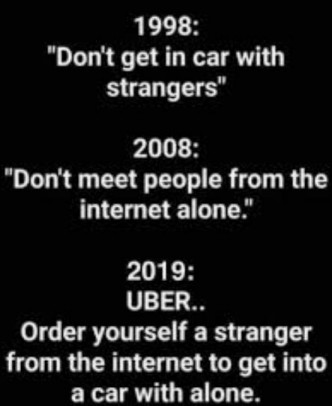
- Why was it bad to meet someone on the Internet in 2000, but OK in 2015 to not only meet, but get in their car?
- Where does cyberspace end
- Should I put a “stop” to cyberspace. When? How?
- Where do cyberspace and bodyspace touch
- What can I do for the 2 parts of my “sandwich”
As I write about this, it ignites my curiosity for the changes wrought by the telegraph, telephone, radio, and television. Automobiles could be included here, too, but I will attempt to limit this to communication more so than movement. I am not so conceited to think the DSG is COMPLETELY unique in dealing with such a disruptive force as the Internet. I would believe people had to be both for and against telephones, radios, and televisions. I am certain the TSG found these devices intrusive, annoying, interesting, and absorbing all at the same time, same as the DSG. The main difference being “intrusive” and “absorbing” and finding the necessary balance.