What Does "Curate" Mean Online?
Merriam Webster: Curate (verb)
to select (the best or most appropriate) especially for presentation, distribution, or publication; to select and organize (artistic works) for presentation in (something, such as an exhibit, show, or program).
Does anyone curate the Internet? Given its size, how would one even start? Good questions! Answers are as follows: Yes, and much the same way a library or museum would be curated, just in a totally digital sense! With that comes human and artificial intelligence partnerships.
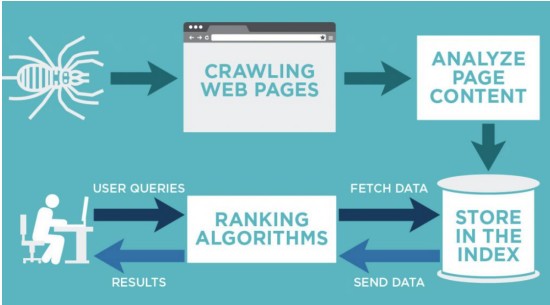
Let’s start with the biggest curators out here, and frankly, ones we forget we’re using: **Search engines.** Remember, when you use Google, Yahoo, Bing, or any other search engine, you’re not “searching the Internet,” but searching that company’s database (or index) of websites. Google calls it the “Google Index.” Twitter is a monster engine as well, and it differs from any other search engine as it is live and user-driven. When there’s breaking news or some kind of outage, users go to Twitter first and share information.
A New Approach to Curation: Faves
Stephen Mostrom introduced me to an app called Faves. He begins with an obvious analogy:
“when it comes to tracking down information or growing our knowledge base, the Internet still feels like a million tiny roads with no GPS. Here’s the thing. We’ve figured out this problem in other areas. The Internet’s not quite as novel as we think it is. For generations, humanity has constructed creative ways to store information in the written word. You know, those things called books.”
Now we who work in libraries can laugh at this (I snorted in my office and had to tell people I was alright) but it’s a problem because we really need more people thinking about this. We librarians can also give a unique perspective to the digital world - one with **cataloging *cough curating cough* experience.** We even get schooling in it!
Goodreads is an excellent site for book curation - recommendations, lists, authors, the works! Well, it appears that Faves works like that, but for the Internet. Zachery Lim describes it as such:
“After messaging, link sharing is the most common user behavior in the world. Yet, amazingly, it has no dedicated platform. Most of us share links through messaging apps — but the experience just isn’t right. Articles start to feel like obligations as texting has become the new email. Faves is a different app where friends can connect over content. Users (or curators as they’re called) post their favorite content to Faves and follow each other to see what their friends like. The app has a **Tiktok-like interface** with one piece of content per screen. Faves has also leaned into social audio. Users can reply to posts with 20 seconds of audio and even add popular soundbites from TV Shows like The Office….”
Faves: Content Over Location
What use is a new app? I find myself restraining the urge to roll my eyes. This just sounds like just one more thing to do, check, or waste my time on. Interestingly, Lim goes on to say:
“people can connect with each other over content. Users share their favorite tweets, memes, articles, videos and podcasts and find all the best content on a subject in just one place. Faves provides a place for users to learn what content is influencing the decisions of people they respect and laugh at what their friends find funny.”
The key here seems to be the **content, not the location.** Not links to click on, but the content itself. With an interface similar to TikTok, as noted above, it seems like it would be easy. It’s available on Android through the Play Store as “Fave” by Fave Technologies. Searching that gives the best result for the app itself.
I poked around and found it through the store. It appears to have mostly musical artists on it right now, but even though it launched in 2018, it is still new. In a glut of new social media startups, it holds potential for ease of sharing and crisscrossing of platforms. This remains to be seen, and I think I’ll end up deleting it from my phone. Google, Twitter and Goodreads are enough for me for now!
References
- Kevin Dickinson. (2018). This is how we might explore the internet after Google. Retrieved from Big Think Website: https://bigthink.com/the-present/explore-internet-after-google/.
- Faves App Information: https://faves.media/
- Zachery Lim. (2021). How Faves Is Building the Future of Content Curation. Retrieved from Medium Website: https://medium.com/xoogler-co/how-faves-is-building-the-future-of-content-curation-931d6718a46f.
- Stephen Mostrom. (2021). Finally, a Social Media Platform Built for Curators. Retrieved from The Startup Website: https://medium.com/swlh/finally-a-social-media-platform-built-for-curators-ea52b5448689.
- Photo Credit, Creative Commons License: Photo by Pixabay: https://www.pexels.com/photo/books-in-black-wooden-book-shelf-159711/.