Continuing from the last post, let’s dive into control vs. agency. As mentioned, control has more of a connotation of “force,” and agency has more of a connotation of “modeling” or “self-control.” I’m going to stick with “modeling” in this essay, as it does not have the word “control” in it! I now admit to having this stuck in my head:

Back to the subject at hand. I am again referencing Mr. Rao’s article about health vs junk food for the brain, and he writes this analogy, “If you woke up in the morning, smoked a cigarette, ate 2 donuts, and washed it down with 2 cups of coffee, it wouldn’t be surprising that your physical performance is subpar. You’re probably not going to go out and run 2 miles or win a prize fight after that kind of breakfast. But when it comes to our brain, we’re not nearly as mindful about the idea that we should treat the information we consume like the food we eat.” He goes into our brain state and how we’re suggestible when we wake up - we can help set our moods by consuming healthier information, or even, no real information. Now that’s my term, “real information.” I mean waking up and not grabbing your cell phone. STOP using your phone as an alarm - invest in an alarm clock, a dog, a cat, a rooster, or a Victorian alarm clock, so that the first thing you wake up to is literally anything else but your phone. “Mary Smith using peas as an alarm clock”

Best of all, if we start with an alarm, or a pet, or a person, or meditation, or exercise, or just some actual quiet time (the snooze button doesn’t count!), we give our brains time to get up and out of that alpha theta wave suggestive state. By literally giving ourselves permission to be quiet immediately upon waking, we take more control over our mood and subsequently, our day.
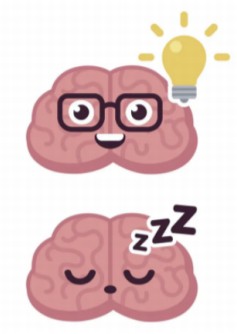
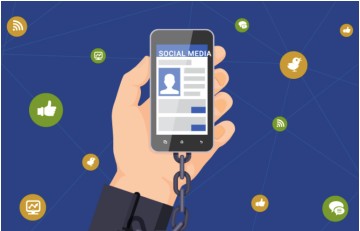
This goes directly to digital agency and modeling behaviors we’d like to see reflected in those around us. Does that mean that someone’s watching you when you wake? Goodness, I hope not! It does mean that when you have set the tone for your day, you feel better, you understand and experience that conscious decision, and may be more likely to share it with others. I’m not advising anyone to get a soap box and bullhorn, but remember, a well-placed word can make a difference! Mr. Rao goes on to say, “If we start our days by checking email, instagram, or the internet, we keep reinforcing the behavior of distraction until it becomes our new habit. Some of the smartest behavioral scientists and designers in the world have worked really hard to make sure that their products are addictive, habit forming, and only provide you with a temporary sense of fulfillment so that you are always jonesing for your next fix.” I think we’re most influential when we’re empathetic rather than judgemental. If someone mentions that they start the day on their phone, we might say, “How do you feel about that?” Or, “I used to, now I sit up and take a 10-second breath before I get going.” Nothing big, just normal conversation that might lead to talk, from both parties, about digital agency in life.
Lastly, I’m not just recommending the following because I’m a librarian, but because it’s actually good advice: read books, not just the Internet. Mr. Rao writes, “When we read on the internet, we tend to scan more than we read. How often do you sit around at a dinner party discussing the amazing article you read on the internet?” He even says that books he’s read on ereaders are actually more memorable to him if he re-reads them in print!
I am completely aware of the irony of writing this in a blog on the Internet, but note that I said “not just the Internet.” The Internet is an amazing space - it really is a space in and of itself. The Net is the new neighborhood hangout, YMCA, gym, community center, or even kitchen table. It’s just as much of a hangout spot as those are, or used to be. Of course, as useful as, say, courteous behavior is in real life, it’s useful to know and practice digital agency as self-control with the Internet.
As we might model behavior in a common area, like a store, so we can model agency with the Internet. For example, if there’s a baby crying and I’m with my family, I might say, “Well, that baby must be hungry or tired.” By voicing this option, I hope to have given others a different way of thinking, or even helped them feel a bit better. When a baby cries, it’s quite irritating! By taking focus off my own irritation and voicing empathy, I hope to help others do likewise. This works in the same way for the Internet or connected devices. If we’re out at a restaurant, I sit down and talk to my companions - I even look them in the face! I do not immediately pull out my phone - even if I’m at a restaurant where the menu is a QR code on the table. There’s time to engage in some small talk before we need to see the menus!
I get to do this most often when I’m in line for a cashier. If I’m using my phone in any way while I’m waiting - including talking! - I put the phone down, greet the cashier, and complete my in person transaction.
In this manner I hope to show the people right in front of me that they are more important than the phone. It’s not preaching, it’s not forced or yelling, it’s just showing. Modeling. Agency. The more we do this, the easier it gets, believe me!
What steps do you think you might take to model digital agency in your library? How can you help your family? Do you think you have influence on patrons in the library? Good luck!